
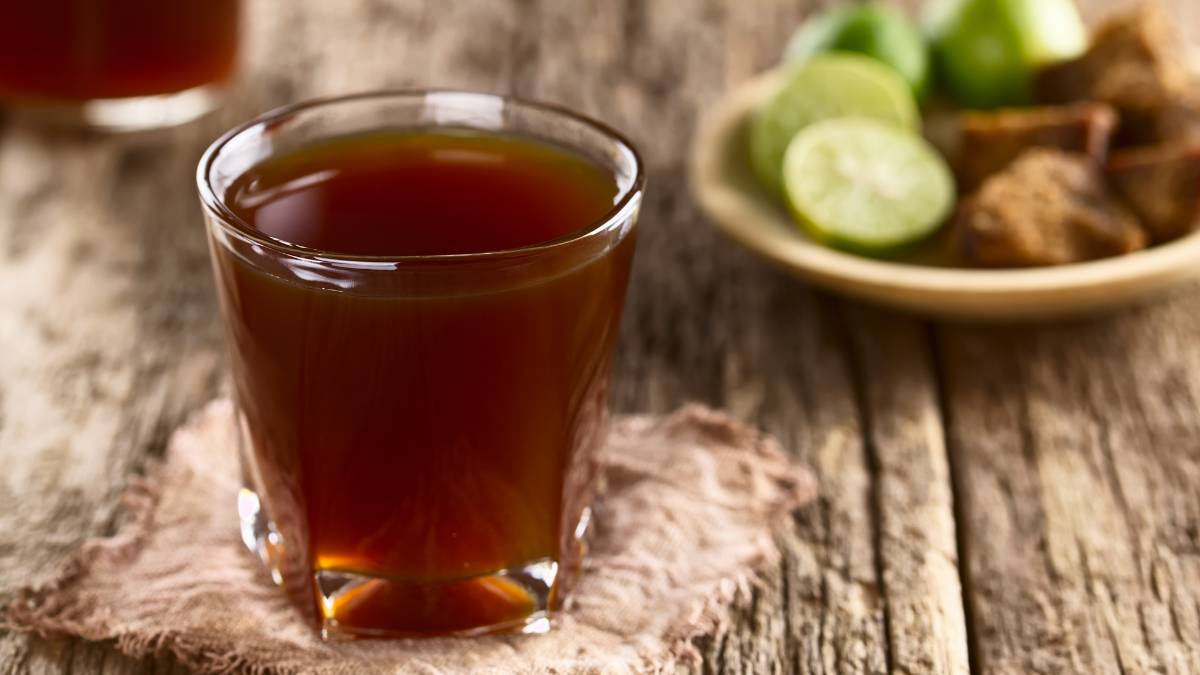
Explore the rich and varied culture of Venezuelan beverages, from refreshing chicha to creamy ponche crema. This article immerses you in a world of unique flavors and shows you how to prepare these delicious drinks at home. Ideal for food lovers and those curious about culinary traditions, each recipe offers a glimpse into the heart of Venezuela.
Venezuelan drinks are not only delicious, but they also have a history and tradition that makes them unique. From chicha, a fermented corn drink that can be found throughout the country, to ponche crema, a type of creamy liquor made from eggs, condensed milk and rum, there are a wide variety of options to explore and enjoy.
Table of Contents
One of the most popular drinks in Venezuela is chicha, which is prepared with sprouted corn, sugar and spices such as cinnamon and cloves. This drink is refreshing and can be found in both its alcoholic and non-alcoholic versions. There are also regional chichas, such as Andean chicha, which is prepared with rice and panela.
Another Venezuelan classic is papelón con limo, a sweet and citrusy drink that is prepared with panela (cane sugar) dissolved in water and lemon juice.
It is perfect for quenching thirst on a hot day and is very easy to prepare at home.
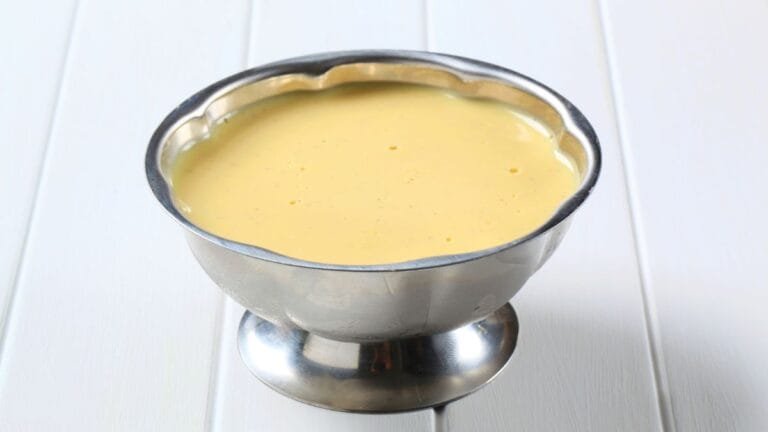
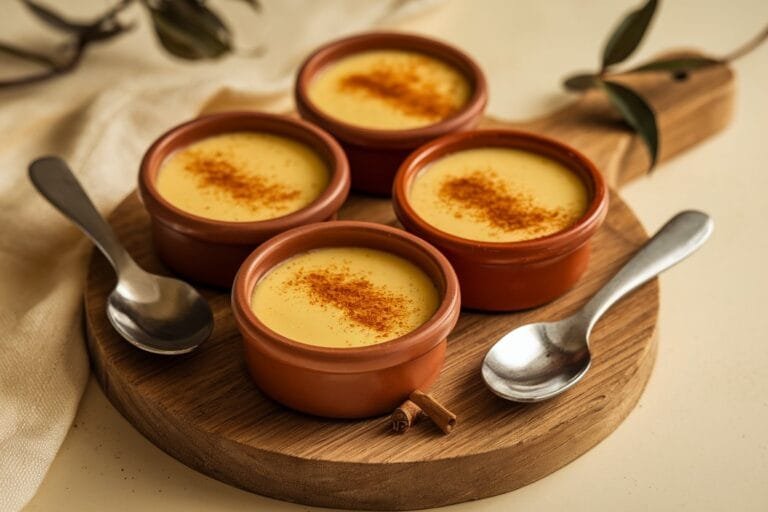
Of course, we cannot forget the famous cream punch, a typical drink of the Christmas holidays in Venezuela. This creamy, sweet drink is made with condensed milk, evaporated milk, eggs, rum, and vanilla. It is served cold and is perfect to enjoy in the company of family and friends during the end of the year celebrations.
Overall, Venezuelan drinks are a true culinary gem worth exploring and enjoying. With simple ingredients and easy-to-follow recipes, you can share and savor the rich Venezuelan culture from the comfort of your home. Don't miss the opportunity to try these delicious drinks and immerse yourself in the gastronomic tradition of Venezuela with the information we share with you in this authentic guide!
-
Product on offer
 Frozen Mini Venezuelan Chicharrón Arepas (2 Bags of 14 Units)The original price was: $45.00.$43.15The current price is: $43.15.
 -
Product on offerMini Venezuelan Cheese and Frozen Bean Empanadas (Box 48 Units)The original price was: $95.00.$78.25The current price is: $78.25.
-
Product on offerGarlic Sauce, 8 OZ – Mosaic SaucesThe original price was: $21.00.$16.96The current price is: $16.96.

Your Orders for Frozen Products and Sauces Mosaico Frozen do Free shipping within United States.
FROZEN MOSAIC – TEQUEÑOS NEAR YOU IN THE UNITED STATES
What makes Venezuelan Chicha unique?
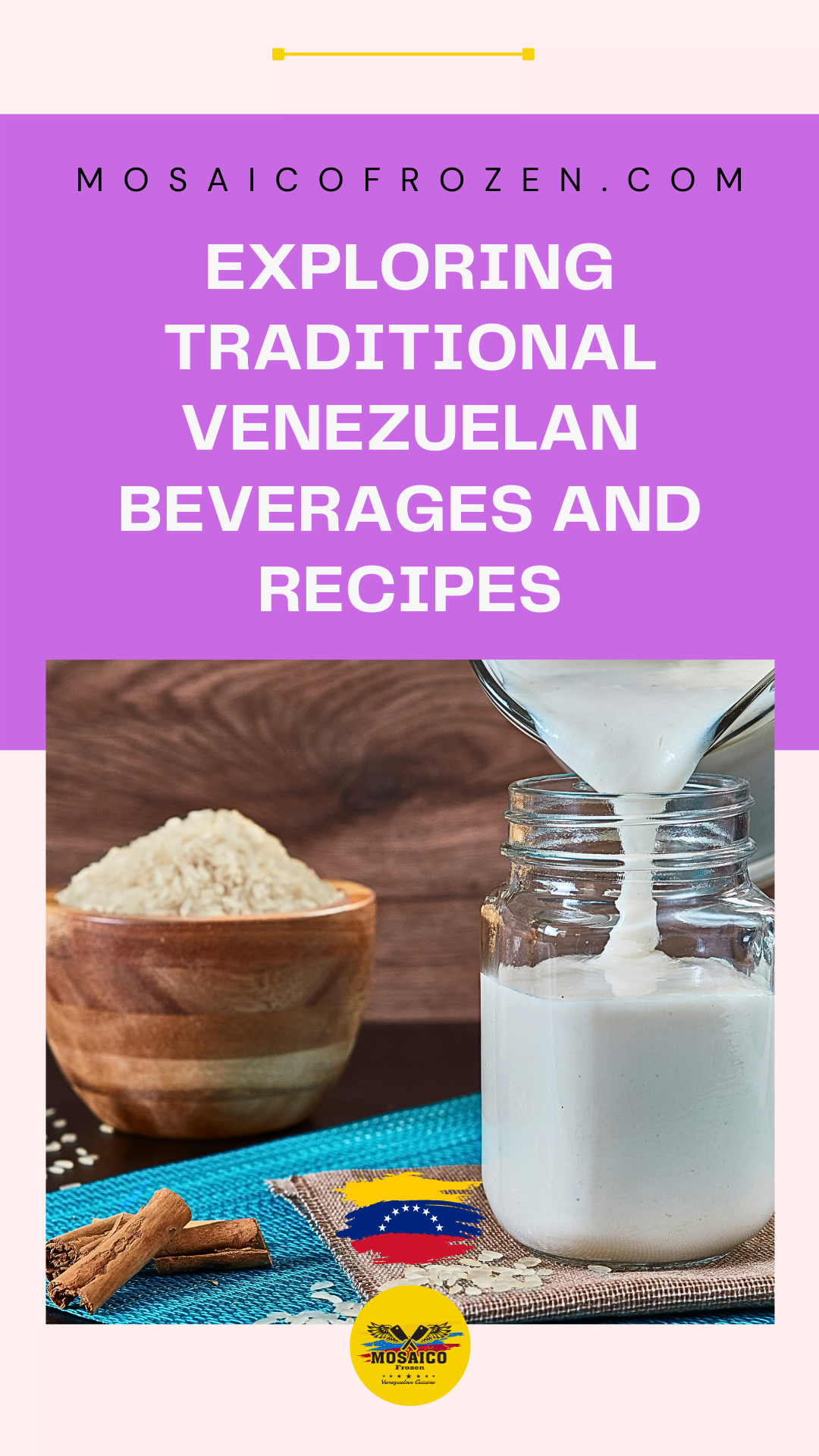
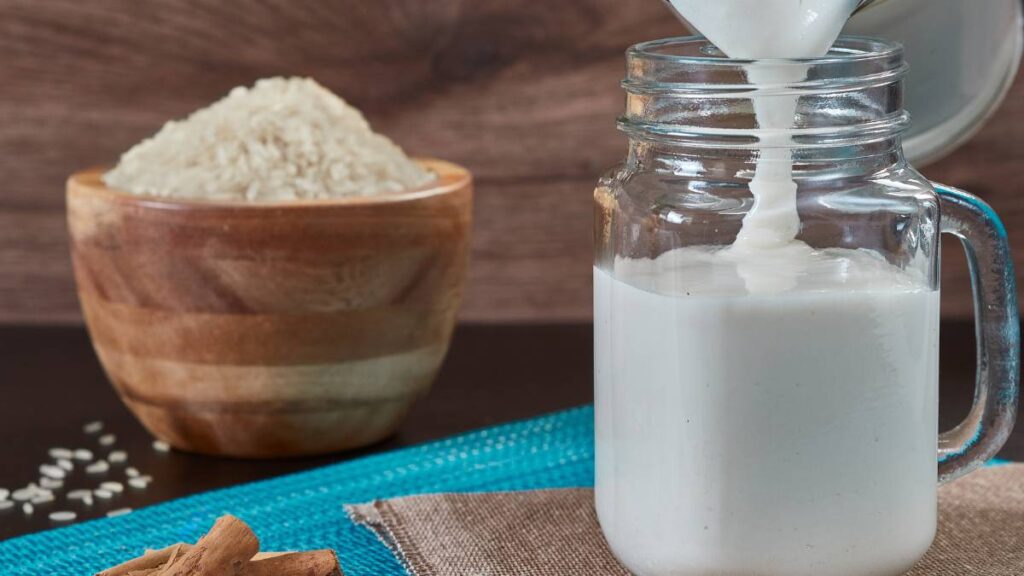
Venezuelan chicha is more than just a drink; it's a representation of the country's cultural diversity. Traditionally made from rice or corn, this beverage can vary from region to region, adapting to local tastes and available ingredients. In some areas of Venezuela , it's common to add condensed milk and cinnamon to create a sweet and creamy version, while in others, pineapple juice is added, providing a refreshing, tropical touch. These variations not only demonstrate chicha's versatility but also how each region imprints its cultural identity on this beloved drink.
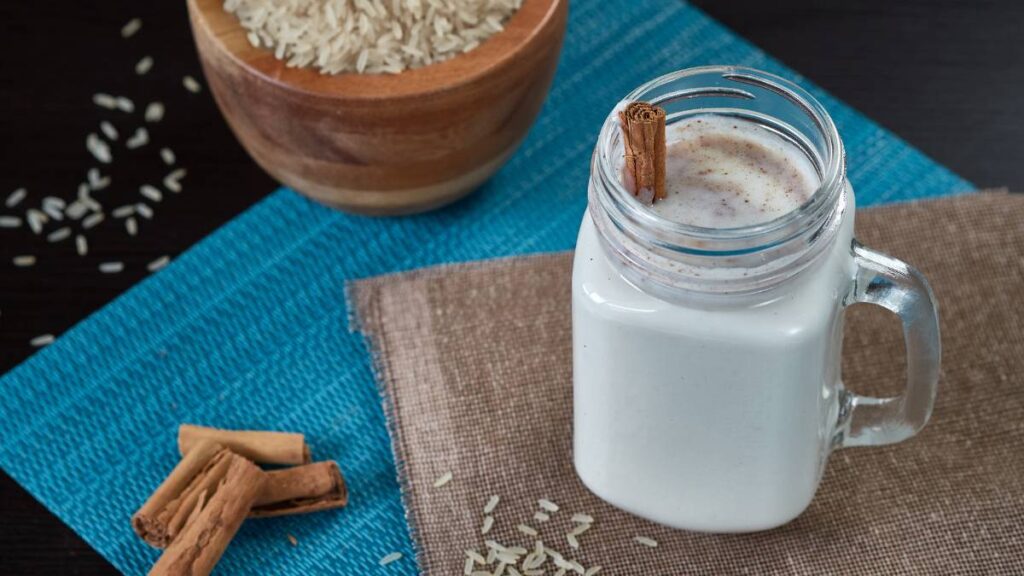
Venezuelan Rice Chicha Recipe
For those interested in recreating this traditional drink at home, here is a basic rice chicha recipe with measurements in grams and ounces:
Ingredients:
- 250 g (8.8 oz) white rice
- 1,5 liters (50 fl oz) of water to cook the rice
- 200 g (7 oz) sugar (adjust to taste)
- 1 can of condensed milk (397 g or 14 oz)
- 1/2 teaspoon of vanilla essence
- 500 ml (17 fl oz) whole milk
- Cinnamon powder to taste
Instructions:
- Preparation of the rice: Wash the rice well under cold water until the water runs clear. Place the rice and 1,5 liters of water in a large pot. Cook over medium-high heat until the rice is very soft and the water has been almost completely absorbed, about 20-25 minutes.
- Smoothie: Let the rice cool slightly. Then, in a blender, mix the cooked rice with the whole milk until you obtain a homogeneous mixture. You may need to do this in batches depending on the size of your blender.
- Add flavors and sweet: Add the condensed milk, sugar and vanilla to the rice and milk mixture. Mix well until everything is well incorporated and the sugar is completely dissolved.
- Cool: Pour the chicha into a large jar and refrigerate until very cold, at least 3 hours.
- To serve: Stir well before serving and adjust sweetness if necessary. Serve in glasses with ice and sprinkle with cinnamon powder to taste.
This Venezuelan chicha recipe offers a perfect balance between creaminess and sweetness, with a touch of cinnamon that makes it irresistibly delicious. It is ideal to serve as a refreshment on a hot day or as a special sweet after a meal. Chicha is definitely a drink that encapsulates the spirit of Venezuelan hospitality.
How to prepare Papelón with Lemon?
Papelón with lemon is a refreshing and emblematic drink from Venezuela, ideal for quenching thirst on a hot day. This drink combines the natural sweetness of papelón, also known as panela, with the vibrant acidic flavor of lemon, creating a perfect balance of flavors that is both revitalizing and delicious.
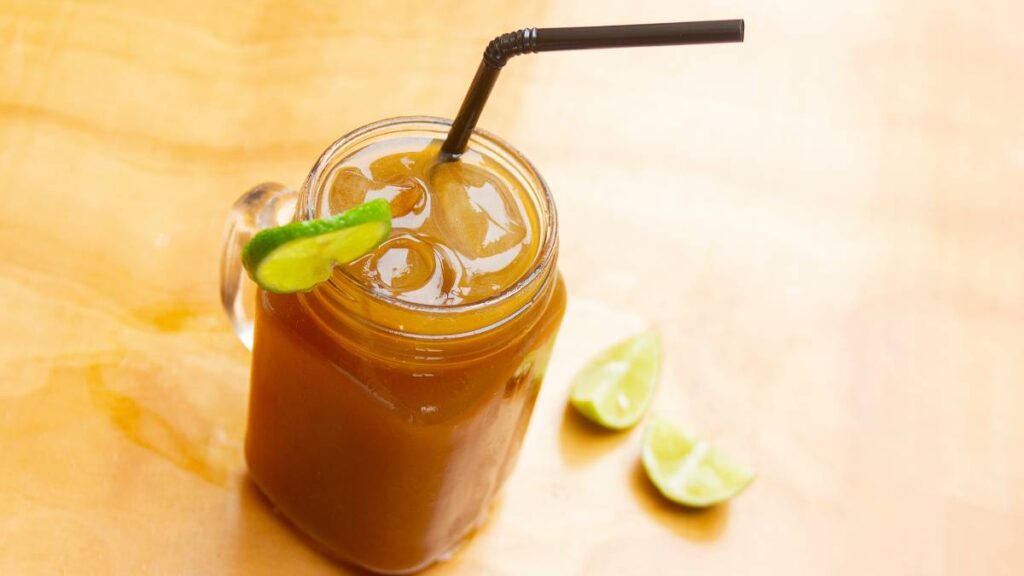
Recipe for Papelón with Lemon
Here I offer you a simple recipe to prepare papelón with lemon, with precise quantities in both grams and ounces so that you can follow the steps without complications:
Ingredients:
- 200 g (7 oz) of paper (panela)
- 1 liter (34 fl oz) of water
- Juice of 3 large lemons (about 150 ml or 5 fl oz)
- Ice to taste
- Lemon slices to decorate (optional)
Instructions:
- Prepare the paper: In a medium pot, place the paper and water. Bring to a boil over medium heat, stirring occasionally to make sure the paper is completely dissolved.
- Cool the mixture: Once the paper has dissolved and the mixture has boiled, remove from heat and let cool to room temperature. You can speed up this process by placing the pot in a cold water bath.
- Add lemon: When the papelón mixture is cold, add the lemon juice and mix well.
- To serve: Serve the papelón with lemon in glasses filled with ice. Garnish with lemon slices if desired.
- Adjust to taste: If you prefer your drink sweeter or more acidic, you can adjust the amount of lemon or lemon juice according to your personal preferences.
This drink is not only delicious and easy to make, but it also offers hydrating and energizing benefits thanks to the natural minerals in the unrefined cane sugar (papelón) and the vitamin C in the lemon. It's perfect to serve during family gatherings, parties, or simply as a refreshing drink any time of day. Plus, papelón con limón is a great way to experience a classic of Venezuelan culture in your own kitchen.
Punch Cream: festive drink par excellence?
Cream punch is one of Venezuela's most iconic drinks during the festive season. Similar to eggnog, but with a Caribbean touch, this creamy and alcoholic drink is a classic at celebrations and family gatherings. The secret of its delicious texture and flavor lies in the careful technique of its preparation and the quality of the ingredients used.
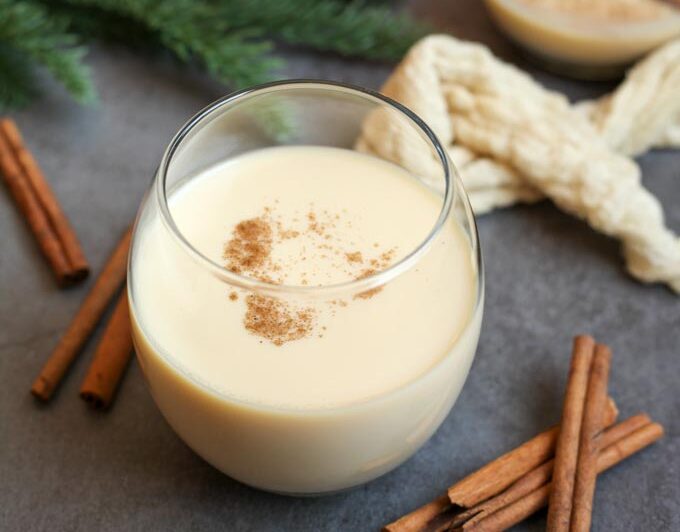
Venezuelan Cream Punch Recipe
Below, I offer you a detailed recipe to prepare cream punch, with precise measurements in grams and ounces to facilitate its preparation:
Ingredients:
- 500 ml (17 fl oz) whole milk
- 200g (7oz) sugar
- Yolks 6
- 1 teaspoon of vanilla
- 250 ml (8.5 fl oz) dark rum
- A pinch of nutmeg to decorate
Instructions:
- Prepare the base: In a medium saucepan, mix the milk and sugar. Heat over medium heat, stirring constantly, until the sugar is completely dissolved and the mixture is almost boiling.
- Temper the yolks: In a bowl, beat the egg yolks. Gradually add the hot milk and sugar mixture to the yolks, pouring in a steady stream while whisking continuously. This is to temper the yolks and prevent them from cooking too quickly.
- Cook the mixture: Pour the entire mixture back into the pot and cook over low heat, stirring constantly with a wooden spoon, until the mixture thickens enough to coat the back of the spoon. This may take approximately 5 to 10 minutes. It is crucial not to let the mixture boil to prevent the yolks from curdling.
- Add flavorings: Remove the pot from the heat and add the vanilla and rum, mixing well.
- Cool: Let the cream punch cool to room temperature before placing it in the refrigerator. Chill for at least 3 hours before serving.
- To serve: Serve the cream punch very cold, sprinkled with freshly grated nutmeg.
The cream punch is ideal for toasting on special occasions, offering a rich and creamy flavor that captures the essence of Venezuelan hospitality. With this recipe, you can bring a piece of Venezuela to your holiday table and share with friends and family the authentic taste of one of its most beloved drinks.
Andean Chicha vs. Chicha Criolla: Comparison
While Andean chicha is prepared mainly with corn and is consumed cold, chicha criolla can include rice or corn and can casually be served hot with cinnamon. Both offer different but equally delicious taste experiences and reflect the culinary diversity of Venezuela.
Andean Chicha: Traditional Recipe with Pineapple Ferment
Many Venezuelan Andean chicha recipes use pre-cooked white corn flour or white rice and add a fermentation process, commonly using pineapple peel, which enriches the flavor and adds a refreshing and slightly acidic dimension to the drink. Here I provide you with a more authentic version of Andean chicha that includes these components.
Recipe for Andean Corn Chicha with Pineapple Ferment
Ingredients:
- 500 g (1.1 lbs) pre-cooked corn flour
- 3 liters (101 fl oz) of water
- 200 g (7 oz) sugar (adjust to preference)
- Peels of a large pineapple
- Ice to taste (to serve)
Instructions:
- Prepare the ferment: Wash the pineapple peel well. In a large container, place the pineapple peels and cover with 1 liter of water. Let it sit at room temperature for 2 to 3 days until the water begins to ferment and takes on a characteristic fermentation smell.
- Cook corn flour: In a large pot, dissolve the cornflour in 2 liters of water, making sure there are no lumps. Cook over medium heat, stirring constantly, until the mixture thickens and begins to boil. Remove from heat and let cool completely.
- Combine and ferment: Once the corn mixture is cold and the pineapple water has fermented, strain the pineapple liquid to remove the husks and mix with the cooked corn flour. Add the sugar and stir well.
- Let rest: Let the mixture ferment for at least 24 hours in a cool, shady place. This additional fermentation will further develop the flavors and give it a slightly effervescent character.
- Cool and serve: Refrigerate the chicha until it is very cold. Serve in glasses with ice to taste.
This version of Andean chicha is not only refreshing and delicious but also offers a glimpse into the traditional fermentation techniques used in the Andean region of Venezuela. The use of pineapple peels to start fermentation is a clear example of how local ingredients can be artfully used to create unique and authentic flavors in Venezuelan cuisine.
-
Product on offerFrozen Mini Venezuelan Chicharrón Arepas (2 Bags of 14 Units)The original price was: $45.00.$43.15The current price is: $43.15.
The role of corn in Venezuelan drinks
Corn, one of the most cultivated and consumed cereals in Latin America, plays a fundamental role in Venezuelan gastronomy, especially in its repertoire of drinks. This grain, due to its versatility and availability, has been a mainstay in the diet since pre-Columbian times, and its influence extends beyond solid dishes to an impressive variety of both sweet and savory drinks.
Purple corn liquor
As already mentioned, corn chicha is one of the most emblematic drinks that uses this cereal. It is a fermented drink that can vary in texture and flavor depending on its fermentation time and the additional ingredients that are added, such as dulce de papelón or condensed milk, thus adapting to the local tastes of each region of Venezuela. .
Corn starch
Atole, although more common in Mexico and Central America, also has its version in Venezuela, where it is known as "chicha de jojoto." It is prepared with sweet corn (jojoto), milk, sugar, and cinnamon is often added. This atole is primarily consumed hot and offers a creamy texture and sweet flavor that makes it a comforting drink during the colder months or as an energizing breakfast.
Porridge
Another traditional drink that uses corn is mazamorra, which resembles a liquid pudding and is made with ground white corn, milk, sugar, and sometimes cinnamon. Although it can be consumed hot, in some regions of Venezuela it is preferred cold, especially during local festivities and celebrations.
Pozol
Although pozol is more typical of the cuisine of southern Mexico, its consumption has spread in some areas of Venezuela, especially those with strong indigenous influence or where communities of Mexican immigrants reside. This drink is made from corn dough cooked with lime, which is then mixed with water and can be consumed salted or sweetened, you can even add cocoa for a richer and more complex variant.
Cultural and nutritional impact
Corn is not only a vital component in terms of flavor and tradition, but also in nutrition. Corn-based drinks are an important source of carbohydrates and, when combined with other ingredients such as milk or paper, provide energy and other essential nutrients. In Venezuelan culture, these drinks not only nourish the body but also strengthen community and family ties, being frequent at meetings and celebrations.
In short, corn is much more than a staple food in Venezuela; It is a symbol of culture, a pillar of gastronomy and a bond that unites generations with its multiple uses, especially in the preparation of traditional drinks that reflect the rich diversity of the country.
Tizana: a Venezuelan tropical fruit cocktail
Tizana is more than just a fruit cocktail; It is a drink representative of the joy and color of Venezuela. This cocktail is not only a delight for the palate thanks to its combination of tropical flavors, but it is also a visual feast with its variety of colorful fruits. Perfect for any gathering, tizana refreshes and delights everyone, becoming a favorite during warm days.
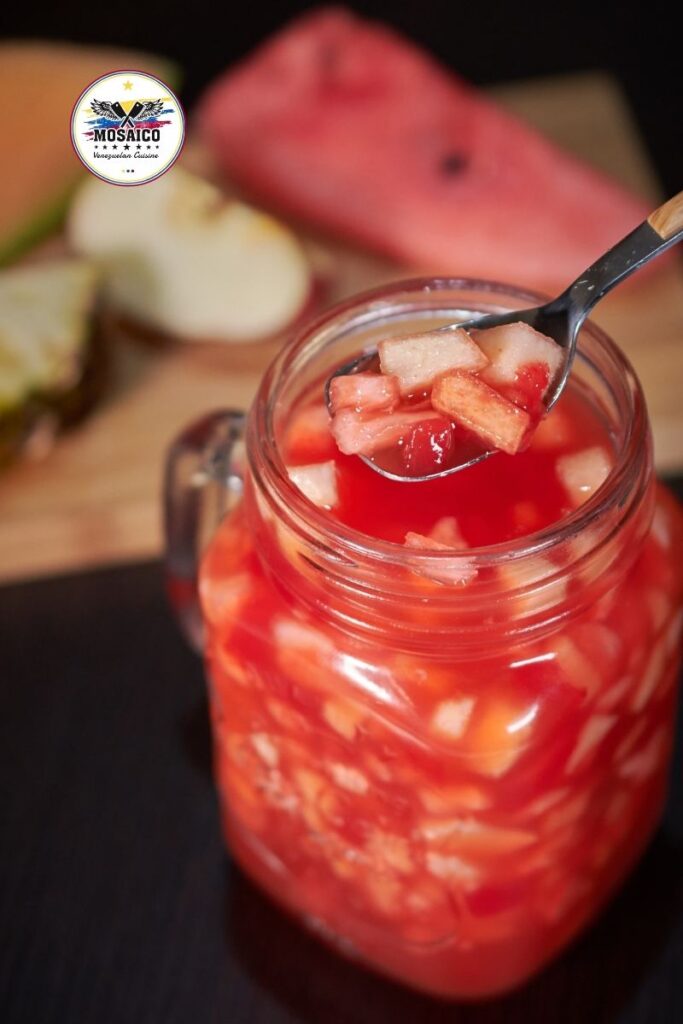
Venezuelan Tizana Recipe
Ingredients:
- 250 g (8.8 oz) fresh pineapple, cut into cubes
- 200 g (7 oz) ripe mango, peeled and diced
- 150 g (5.3 oz) papaya, peeled and cut into cubes
- 100 g (3.5 oz) strawberries, halved
- 100 g (3.5 oz) cantaloupe, cut into cubes (optional)
- 100 g (3.5 oz) seedless grapes, halved (optional)
- Juice of 3 oranges (approximately 300 ml or 10 fl oz)
- Juice of 2 lemons (about 100 ml or 3.4 fl oz)
- 1 liter (34 fl oz) mineral water or soda for an effervescent touch
- Ice to taste
- Fresh mint leaves to decorate (optional)
Instructions:
- Prepare the fruits: Wash all fruits carefully. Peel and cut the pineapple, mango, papaya, and melon into uniform-sized cubes. Cut the strawberries and grapes in half. Be sure to remove any seeds or inedible parts.
- Mix the juices: In a large jug, mix the orange and lemon juice. This will form the liquid base of the chalk.
- Combine fruits and juice: Add the prepared fruits to the jug with the juices. Stir well to ensure that all the fruits are coated with the juice, which will help them release their flavors.
- Add mineral water or soda: Just before serving, add mineral water or soda to give it a refreshing and slightly effervescent touch. Stir gently to mix without breaking up the fruits.
- Cool: Add ice to taste and decorate with fresh mint leaves for an aromatic and decorative finish.
- To serve: Serve the tizana in large glasses or a jug so that guests can serve themselves to their liking.
This tizana recipe is not only a pleasure for the senses with its mix of colors and flavors, but it is also incredibly versatile. You can adjust the fruits depending on the season and your personal preferences, or even add a touch of rum or vodka to make it an adult drink. Tizana is a great way to incorporate more fruits into your diet in a fun and delicious way.
What is mango soda and how is it made?
Mango soda is a popular drink in many tropical countries where mango is abundant. In Venezuela, this drink is highly appreciated for its sweet and refreshing flavor, in addition to being an excellent source of vitamins and minerals. Making mango soda at home is very simple and results in a perfect drink for hot days or as a complement to any meal.
Mango Soda Recipe
Ingredients:
- 500 g (1.1 lbs) ripe mango, peeled and diced (about 2 large mangoes)
- 1 liter (34 fl oz) cold water
- 50 g (1.8 oz) sugar, or to taste (optional)
- Ice to taste
- Fresh mint leaves to decorate (optional)
Instructions:
- Prepare the mangoes: Peel the mangoes and cut the pulp into cubes, discarding the central stone.
- Liquefy: In a blender, add the mango cubes and some of the water (about 500 ml or 17 fl oz to start). Blend until you obtain a smooth and homogeneous mixture.
- Add sugar and more water: Taste the mixture and, if you wish, add sugar to taste. Continue blending and add the rest of the water gradually until you reach the desired consistency. Some people prefer a thicker, pulpier soda, while others prefer it more liquid.
- Strain (optional): If you prefer a pulp-free juice, you can strain the mixture using a fine strainer to remove any fiber bits. This is completely optional and depends on your personal preference.
- Cool: Serve the mango soda in ice-filled glasses for an ultra-refreshing drink. Decorating with mint leaves can add a touch of freshness and color.
- To serve: Enjoy your mango soda immediately to make the most of its freshness and flavor.
Mango soda is a delicious and healthy option to keep you hydrated and satisfied. It is rich in vitamins A and C, which are excellent for skin health and the immune system. This recipe will allow you to enjoy the true flavor of mango in its most refreshing form. Additionally, you can adjust the amount of sugar according to your preference or even substitute it with honey or an alternative sweetener for a healthier version.
The Andean influence in Venezuelan drinks
The Andean region of Venezuela, characterized by its high mountains and cold climate, has developed a unique culinary culture that is vividly reflected in its traditional drinks. These drinks not only seek to warm the body, but also incorporate a variety of local ingredients that enrich their flavor and nutrition, creating true gastronomic jewels of the region.
Andean Heated
The “Calcado Andino” is a clear example of how climatic conditions and local resources combine to give rise to drinks that are both comforting and medicinal. This drink typically includes a mixture of brandy, spices such as cinnamon and cloves, aromatic herbs such as lemon balm, and sometimes coffee or chocolate, depending on the locality. It serves both to relieve the cold and to provide a boost of energy during the coldest days.
Andean Calentado Recipe
Ingredients:
- 500 ml (17 fl oz) brandy or rum (depending on local preference)
- 1 liter (34 fl oz) of water
- 100 g (3.5 oz) panela (unrefined sugar)
- 2 cinnamon sticks
- 5 cloves
- Lemon balm leaves to taste
- Optional: 250 ml (8.5 fl oz) strong coffee or 100 g (3.5 oz) dark chocolate
Instructions:
- Prepare the infusion: In a large pot, combine the water with the panela, cinnamon sticks, and cloves. Bring to a boil and reduce the heat to simmer gently for about 10 minutes, allowing the spices to release their flavors.
- Add the brandy: Reduce the heat to a minimum and add the brandy or rum, taking care that the mixture does not boil again to prevent the alcohol from completely evaporating.
- Add coffee or chocolate: If you decide to add coffee, add it after the first 10 minutes of boiling. If you prefer chocolate, add it along with the panela and spices so that it dissolves completely.
- Add lemon balm: A few minutes before finishing cooking, add the lemon balm leaves to infuse a herbaceous touch.
- Serve hot: Serve the Andean warming piping hot in heat-resistant cups. This will be a comforting elixir for cold Andean nights.
Other Andean Drinks
In addition to Andean warming, other drinks such as coca tea, very common in the region due to its effect in mitigating the symptoms of altitude sickness, and Andean cream punch, a variant of the traditional cream punch with local ingredients such as Andean blackberry, are popular in this area of Venezuela. These drinks not only fulfill the function of warming and energizing, but are also part of the cultural identity of the Venezuelan Andes, reflecting the adaptability and creativity of its inhabitants in the use of natural resources to enrich their diet and celebrate their heritage.
-
Product on offerMini Venezuelan Cheese and Frozen Bean Empanadas (2 Bags 12 Units)The original price was: $56.00.$45.90The current price is: $45.90.
Traditional Venezuelan alcoholic drinks
Venezuela, recognized worldwide for its exceptional rum, also offers a wide range of alcoholic beverages that reflect its rich biodiversity and cultural heritage. Beyond rum, Venezuelans enjoy a variety of liquors and cocktails that use local fruits and artisanal recipes, each with its own distinctive character and flavor.
Venezuelan Rum
Venezuelan rum is considered one of the best in the world due to its careful aging process and strict production standards that ensure its high quality. Venezuela has protected designations of origin for its rum, such as “Ron de Venezuela,” which guarantees that the rum has been produced and aged in the country under specific conditions. This rum is enjoyed neat, in cocktails or as part of dessert recipes.
cocuy
Cocuy is a traditional alcoholic drink from Venezuela, especially in the Falcón region. It is distilled from the cocuyero agave and has a unique flavor reminiscent of mezcal or tequila. Traditionally, cocuy has been a drink of the working classes, but has recently gained national popularity and recognition as part of Venezuelan cultural heritage.
Guarapita
Guarapita is another popular cocktail that uses local fruits, mainly passion fruit, although other fruits such as mango or soursop can also be used. This drink combines rum or brandy with fresh fruit juice and sugar, resulting in a sweet and very refreshing drink. It is especially popular at parties and informal gatherings.
Cream Punch
Although already mentioned above, cream punch deserves a prominent place among the traditional alcoholic beverages of Venezuela. It is a creamy drink similar to egg liqueur and is commonly consumed during the Christmas season. Each family usually has their own recipe, with variations that may include chocolate, coffee, or nuts.
Alcoholic Andean Chicha
In addition to the non-alcoholic version, a fermented version of chicha that includes alcohol is prepared in the Venezuelan Andes. This is made by fermenting corn with pineapple and sometimes a little brandy is added to enhance its alcohol content, making it a favorite at local festivities and community gatherings.
Cultural Significance
These drinks are not only an example of the creativity and richness of Venezuela's natural resources, but they also play an important role in celebrations and social life. Each drink tells a story of tradition, from the humble origins of cocuy to the sophistication of Venezuelan rum, reflecting the cultural and social diversity of the country. Furthermore, in recent years, there has been growing interest by local artisans in reviving and promoting traditional drinks, ensuring that Venezuelan alcoholic heritage continues to be enriched and adapted to modern times.
Preparing Venezuelan drinks at home: Tips and tricks
Recreating traditional Venezuelan drinks at home can be a delicious and fun way to explore Venezuela's rich culinary culture. Here are some practical tips and tricks that will help you get the best results when preparing these drinks, ensuring that each sip is an authentic reflection of their origins.
Find Authentic Ingredients
- Ingredient sources: For traditional recipes, it is crucial to use authentic ingredients. Look for Latin stores or international markets where you can find specific products such as papelón (panela), precooked corn flour, or Venezuelan rum. These ingredients are the base for many drinks and can make a difference in the final flavor.
- Smart substitutions: If you can't find a specific ingredient, don't be afraid to make smart substitutions. For example, if you can't find papelón, you can use a mixture of brown sugar and molasses to imitate its rich, deep flavor.
Adjust to Your Taste
- Sweetness: Adjust the amount of sugar or paper according to your personal preference. Traditional recipes can vary significantly in terms of sweetness, so start with less and add more if necessary.
- Experiment with flavors: Don't be afraid to experiment by adding different fruits or spices. For example, in a tizana, you can try combinations of fruits that you have on hand or that are to your personal liking, such as kiwi or blueberries for a different touch.
Preparation Techniques
- Fruit maceration: For fruit-based cocktails like guarapita, allow the fruits to macerate in the alcohol for a few hours before serving. This intensifies the flavors and makes the cocktail more aromatic and tasty.
- Ice use: For drinks like papelón con lemon or tizana, using ice not only cools the drink but can also dilute very intense flavors, balancing the drink.
Service and Presentation
- Decorate your drinks: Use fruit slices, mint leaves, or even edible flowers to decorate your drinks. This not only makes them more visually appealing, but can also add a subtle, fresh scent.
- Appropriate glasses: Serve each drink in the glass most appropriate for its type. For example, cream punch can be served in small cognac glasses, while a colorful tizana looks spectacular in a tall glass or large carafe.
Conservation
- Refrigeration: Many of these drinks should be consumed fresh, but some, like cream punch, can be stored in the refrigerator for several days and even improve in flavor over time.
- Consider alcohol: If you're making alcoholic versions, the alcohol can help preserve the drinks longer. However, always check for any changes in flavor or texture before serving.
These tips and tricks will not only help you recreate authentic Venezuelan drinks at home, but they will also allow you to customize them to suit your own tastes and those of your guests, turning each sip into a true celebration of Venezuelan culture.
-
Product on offerSpicy Guasacaca Sauce, 8 OZ – Salsas MosaicoThe original price was: $21.00.$16.96The current price is: $16.96.
Key Points to Remember
- Chicha and ponche crema are iconic Venezuelan drinks, each with its own history and regional variations.
- Venezuelan drinks range from refreshing fruit juices to rich, creamy alcoholic cocktails.
- Making these drinks at home is a great way to explore Venezuelan culture and enjoy unique flavors.
- Don't forget to adjust the recipes according to your personal preferences and experiment with different combinations of ingredients.
You may also like
Venezuelan Creole Sweets: Unique Traditional Recipe Book Full of Authentic Flavors
Discover the Incredible History of Venezuelan Cuisine 2024
Frequently asked questions about traditional Venezuelan drinks
We hope that this selection of questions completes all the information we offer you here about the exciting world of traditional Venezuelan drinks.
-
Product on offerMini Frozen Venezuelan Chicken Empanadas (Box 48 Units)The original price was: $95.00.$78.25The current price is: $78.25.
-
Product on offerMini Venezuelan Cheese and Frozen Bean Empanadas (2 Bags 12 Units)The original price was: $56.00.$45.90The current price is: $45.90.
-
Product on offerFrozen Mini Venezuelan Cheese Empanadas (2 Bags of 12 Units)The original price was: $56.00.$49.50The current price is: $49.50.
Your Orders for Frozen Products and Sauces Mosaico Frozen do Free shipping within United States.
FROZEN MOSAIC – TEQUEÑOS NEAR YOU IN THE UNITED STATES
What are some recipes for traditional Venezuelan drinks?
Among the most notable traditional Venezuelan drink recipes we find the Andean chicha based on rice, the papelón with lemon, very refreshing, and the pineapple carato. These drinks vary in flavor and texture, from the creamy flavor of chicha to the refreshing sweet of papelón with lemon.
How to prepare an authentic Venezuelan chicha?
To prepare an authentic Venezuelan chicha you need boiled rice, milk, sugar, and cinnamon and vanilla are usually added to enrich its flavor. Everything is mixed and then blended until obtaining a thick and creamy drink, which is very nutritious and represents a very characteristic Venezuelan flavor in a glass.
What makes papelón with lemon unique as a refreshing drink?
The papelón with lemon is unique for its simple combination of natural ingredients that provide a refreshing and revitalizing flavor. The mixture of fresh lemon juice, papelón (cane sugar block) and water makes this drink a very popular option in Venezuela to combat the heat, highlighting its natural flavor and easy preparation.
Where can I find recipes for traditional Venezuelan drinks?
The recipes for these drinks can be found in traditional Venezuelan cuisine pages, cookbooks, and also in the free encyclopedia Wikipedia, where more details are given about the ingredients and the preparation process.
Is there any Venezuelan drink that is considered a cocktail?
Yes, the cream punch is an example of a traditional Venezuelan cocktail. It is a thick and creamy drink made from milk, eggs, sugar and rum. This cocktail is especially popular during the Christmas season and is a flavor in a glass that combines the sweet tooth with the alcohol content typical of cocktails.
What ingredients do I need to prepare a Venezuelan pineapple carato?
To prepare a typical Venezuelan pineapple carato you need ripe pineapple, water, sugar, and cloves. The preparation involves cooking the pineapple with sugar and cloves, then blending and straining. It is a refreshing and very aromatic drink, ideal to enjoy at any time of the day.
Is it possible to buy traditional Venezuelan drinks in the supermarket?
Some traditional Venezuelan drinks such as frescolita, a carbonated drink with a unique flavor, can be found in supermarkets inside and outside Venezuela. However, traditional drinks such as Andean chicha are normally bought at street stalls or prepared at home, since their flavor and texture are difficult to replicate in industrial productions.
How does tradition influence the preparation of these drinks?
Tradition plays a fundamental role in the preparation of traditional Venezuelan drinks. From the selection of ingredients to the preparation techniques, each drink carries with it a part of Venezuelan history and culture. The recipes have been passed down from generation to generation, keeping alive the flavor and aroma that characterizes each sip of these emblematic drinks.
-
Product on offerSpicy Guasacaca Sauce, 8 OZ – Salsas MosaicoThe original price was: $21.00.$16.96The current price is: $16.96.
-
Product on offerGarlic Sauce, 8 OZ – Mosaic SaucesThe original price was: $21.00.$16.96The current price is: $16.96.
-
Product on offerVenezuelan Guasacaca Sauce, Green Sauce, 8 OZ – Salsas MosaicoThe original price was: $21.00.$16.96The current price is: $16.96.
Your Orders for Frozen Products and Sauces Mosaico Frozen do Free shipping within United States.
FROZEN MOSAIC – TEQUEÑOS NEAR YOU IN THE UNITED STATES
What are the typical drinks in Venezuela?
Venezuela, with its rich culture and culinary tradition, offers a variety of typical drinks that reflect its gastronomic diversity. Here I mention some of the most popular and emblematic:
- Papelon with lemon – This refreshing drink is made from paper (panela) dissolved in water and fresh lemon juice. It is ideal for hot days and is known for its moisturizing and revitalizing properties.
- chicha – Venezuelan chicha can be made from rice or corn. It is a thick, sweet drink, often enriched with condensed milk and sprinkled with cinnamon. Corn chicha can also be fermented to obtain an alcoholic version.
- Guarapita – An alcoholic cocktail made with rum and tropical fruit juice, usually passion fruit (passion fruit), although it can also be made with mango or soursop. It is very popular at parties and gatherings.
- Cream Punch – Similar to eggnog, this creamy drink is made with milk, eggs, sugar, vanilla, and rum. It is especially popular during the Christmas season.
- Tizan – A juice made from a mixture of fresh cut fruits, such as pineapple, mango, cantaloupe, grapes and strawberries, soaked in orange or lemon juice. It is colorful, refreshing and healthy.
- cocuy – An alcoholic beverage distilled from agave, traditionally consumed in the western region of Venezuela, especially in the states of Falcón and Lara. It has a strong flavor and can be consumed pure or in cocktails.
- Ron – Venezuela is famous for its premium rum, which is considered one of the best in the world due to its elaborate aging process. It is enjoyed alone or in cocktails.
- Coffee – Although not exclusive to Venezuela, coffee plays an important role in daily Venezuelan life. The country produces high-quality coffee, and a “guayoyo” (mild coffee) or a “negrito” (very strong coffee) are popular ways to enjoy it.
These drinks are not only a reflection of the rich biodiversity of Venezuela but also of its culture and traditions, being essential components in celebrations and the daily lives of Venezuelans.
What alcoholic drink is from Venezuela?
Venezuela is mainly famous for two alcoholic beverages that are distinctive to its culture:
- Venezuelan Rum: Considered one of the best in the world, Venezuelan rum is known for its long aging process and strict quality standards. Venezuela has several internationally recognized brands that have won numerous awards for their excellence. This rum is enjoyed both neat and in cocktails.
- cocuy: This is a traditional alcoholic beverage that is distilled from the cocuyero agave, specifically in the Falcón region. Historically it has been a drink of the popular classes, but recently it has seen a resurgence and greater acceptance throughout the country, even being promoted as a product of national pride. It is consumed both pure and in cocktail mixes.
Both drinks reflect the rich tradition and culinary diversity of Venezuela, highlighting its ability to produce high-quality distillates.
What is the official drink of Venezuela?
Venezuela's official and most emblematic drink is rum . Venezuelan rum is recognized worldwide for its high quality and complex flavors, thanks to a meticulous aging process in barrels using the solera system. Venezuela boasts several rum brands that have won prestigious international awards, reinforcing its reputation as one of the world's best rum producers.
Besides rum, Venezuela is also known for other traditional drinks such as cocuy and ponche crema , but rum remains the most prominent in terms of recognition and official status.
What is the drink of Venezuela?
In Venezuela, one of the most representative and popular drinks is Guarapita . This cocktail is made with rum, which is mixed with fresh tropical fruit juice, typically passion fruit (parchita), although mango, soursop, or any other available fruit can also be used. It is known for its sweet and refreshing flavor and is especially popular at parties and social gatherings.
La Guarapita captures the essence of Venezuelan tropicality and creativity in its cocktails, being a favorite among both locals and tourists looking to enjoy an authentic Venezuelan flavor.
What is the name of Venezuelan soft drink?
In Venezuela, a very characteristic and widely consumed soft drink is Frescolita . It's a pink cola with a cherry flavor that has become an icon among the country's sodas. Frescolita is popular among Venezuelans of all ages and is frequently consumed at family gatherings, parties, and everyday events. Although it's not a soft drink exclusive to Venezuela in terms of its type, it is distinctive of the country for its flavor and presence in Venezuelan culture.
What alcohol is popular in Venezuela?
In Venezuela, the most popular alcohols include:
- Ron: Without a doubt, rum is the most prominent and popular alcohol in Venezuela. It is known worldwide for its superior quality, resulting from a strict aging process. Venezuela produces some of the best rums in the world, which are appreciated both locally and internationally.
- cocuy: Traditionally consumed in arid regions, especially in the state of Falcón, cocuy is gaining popularity throughout the country. This distillate is made from the cocuyero agave and is similar to tequila or mezcal in its production process and flavor.
- Whisky: Although it is not a local product, Scotch whiskey has historically been very popular in Venezuela. For decades, Venezuela was one of the largest importers of Scotch whiskey in Latin America, and although imports have decreased due to the economic crisis, whiskey remains a drink of choice at celebrations and social gatherings.
- Schnapps: Known locally as “caña Clara”, it is a sugar cane distillate widely consumed in rural and popular environments. Its production is more artisanal and less commercial than rum or whiskey, but it maintains a significant presence in Venezuelan drinking culture.
These alcohols reflect a mix of local tradition and acquired tastes, and are central to Venezuela's drinking culture.
What is the typical Venezuelan drink that turns into alcohol?
A typical Venezuelan beverage that can be made alcoholic through fermentation is Andean Chicha . Although chicha is commonly consumed in its non-alcoholic form, especially the version made with rice or corn, there is a traditional variant in the Venezuelan Andes that includes a fermentation process.
-
Product on offerFrozen Mini Venezuelan Dogfish Empanadas (2 Bags of 12 Units)The original price was: $56.00.$45.90The current price is: $45.90.
-
Product on offerFrozen Mini Venezuelan Ground Beef Empanadas (2 Bags of 12 Units)The original price was: $56.00.$45.90The current price is: $45.90.
-
Product on offerFrozen Mini Venezuelan Ham and Cheese Empanadas (2 Bags of 12 Units)The original price was: $56.00.$45.90The current price is: $45.90.
Your Orders for Frozen Products and Sauces Mosaico Frozen do Free shipping within United States.
FROZEN MOSAIC – TEQUEÑOS NEAR YOU IN THE UNITED STATES
Alcoholic Andean Chicha
This version of chicha is often prepared with corn and may include the addition of pineapple to aid in the fermentation process, resulting in a drink with a naturally alcoholic content. Fermentation is achieved thanks to the natural sugars of corn and the microorganisms present in ingredients such as pineapple peel, which act on these sugars, transforming them into alcohol.
The fermentation process can vary in duration depending on temperature and environmental conditions, and the final product is a slightly effervescent drink, with an alcohol level that can vary but is generally low.
The Alcoholic Andean Chicha is a reflection of the traditional practices of the Venezuelan Andean peoples and is enjoyed at festivities and social gatherings, being an important part of the regional culture in Venezuela.
Exploring Venezuela's 20 typical drinks is like embarking on a sensory journey that reflects the country's diversity and cultural richness. Each traditional Venezuelan beverage tells a story, from the fermented Andean cocuy to the sweet papelón con limón, offering a mosaic of flavors that make up the national gastronomic heritage. Among these, the thick Venezuelan tizana stands out for its blend of tropical fruits, representing Venezuelan joy and vibrancy in every sip.
In addition to their refreshing qualities, Venezuelan alcoholic beverages also play a prominent role in the country's culture. Venezuelan rum, renowned worldwide for its quality, and the ancestral cocuy, an agave distillate with deep indigenous roots, are just a few examples of the wide array of options Venezuelans offer the world. These typical Venezuelan drinks not only accompany festivities and celebrations but are also a source of national pride due to their authenticity and tradition.
The richness of Venezuelan beverages is evident not only in the non-alcoholic options but also in the variety of Venezuelan alcoholic drinks that have gained international recognition. Among them, the thick Venezuelan tizana , with its characteristic blend of juices and fruit pieces, exemplifies Venezuelan creativity in the art of mixology. Without a doubt, each traditional Venezuelan beverage reflects its people, climate, and land, making typical Venezuelan drinks an indispensable element of the country's identity.
Venezuelan non-alcoholic drinks
Venezuelan non-alcoholic beverages are a colorful and flavorful expression of the country's culture. One of the most emblematic is chicha, traditionally made with rice or corn and served cold with a hint of cinnamon. This creamy drink, with its characteristic sweetness, is a common refreshment on the streets of Caracas and other cities, and a favorite among both children and adults.
Another classic non-alcoholic beverage is papelón con limón , a drink that combines the sweetness of papelón (or panela) with the tang of lemon, resulting in a refreshing beverage perfect for hot days. It's easy to prepare and a favorite to accompany meals, known for its hydrating properties and naturally sweet flavor.
The tizana, on the other hand, is an explosion of colors and flavors. It's a non-alcoholic fruit cocktail where pineapple, melon, strawberry, and mango are blended in a refreshing orange and lemon juice. The variety of fruits makes the tizana a nutritious and very versatile drink, which can be adapted to personal tastes and the availability of seasonal fruits.
For those seeking more authentic flavors, pineapple carato is a must-try drink. This beverage is made with naturally fermented pineapple, water, and sugar, and is characterized by its sweet taste with tangy notes. Pineapple carato is a traditional drink often found at celebrations and is highly valued for its unique flavor and refreshing taste.
Finally, we can't forget guarapo de caña, a beverage made from sugarcane juice. It's a refreshing and energizing drink, very common in rural areas and local markets. Guarapo is best enjoyed ice cold and is ideal for rehydrating after a hot day, another example of Venezuela's rich tradition of non-alcoholic beverages.
Typical non-alcoholic Venezuelan drinks are found throughout the country's regional recipes.
When delving into the vast landscape of Venezuelan gastronomy, one cannot help but savor Venezuela's signature drink , a reflection of its rich cultural heritage. Made with local ingredients and following methods passed down through the centuries, this drink carries the essence of the land and its people. Each sip tells the story of its origin and the hands that prepare it with dedication and pride.
The quintessential Venezuelan drink that captivates both locals and visitors is rum, a spirit that has crossed borders and gained international acclaim. Its complex flavors and exquisite aging make it the perfect accompaniment to a wide range of cocktails and celebrations. However, its versatility also allows it to be enjoyed neat, letting you appreciate every nuance of its authentic flavor.
On the other hand, the traditional Venezuelan drink enjoyed daily is papelón con limón, a refreshing and sweet mixture that has become a symbol of hospitality and simplicity. This natural beverage, made with sugarcane juice and lemon, offers welcome relief from the tropical heat and is a testament to Venezuelan creativity in using local resources.
Venezuela's regional beverages are as diverse as its landscapes. From Andean cocuy, with its strong and distinctive flavor, to Caribbean sugarcane juice, each region contributes its own signature to the country's repertoire of drinks. These beverages are not only a means of cultural expression but also an invitation to explore the different facets of each region of Venezuela.
Ultimately, talking about typical Venezuelan drinks means talking about a mosaic of options that satisfy every palate. Whether it's a typical Venezuelan cocktail, a traditional Venezuelan drink, or the various regional beverages, each drink tells a story and connects people to their roots and traditions. These flavors, aromas, and colors form the heart of Venezuelan identity and continue to captivate those who have the pleasure of tasting them.